Everlasting
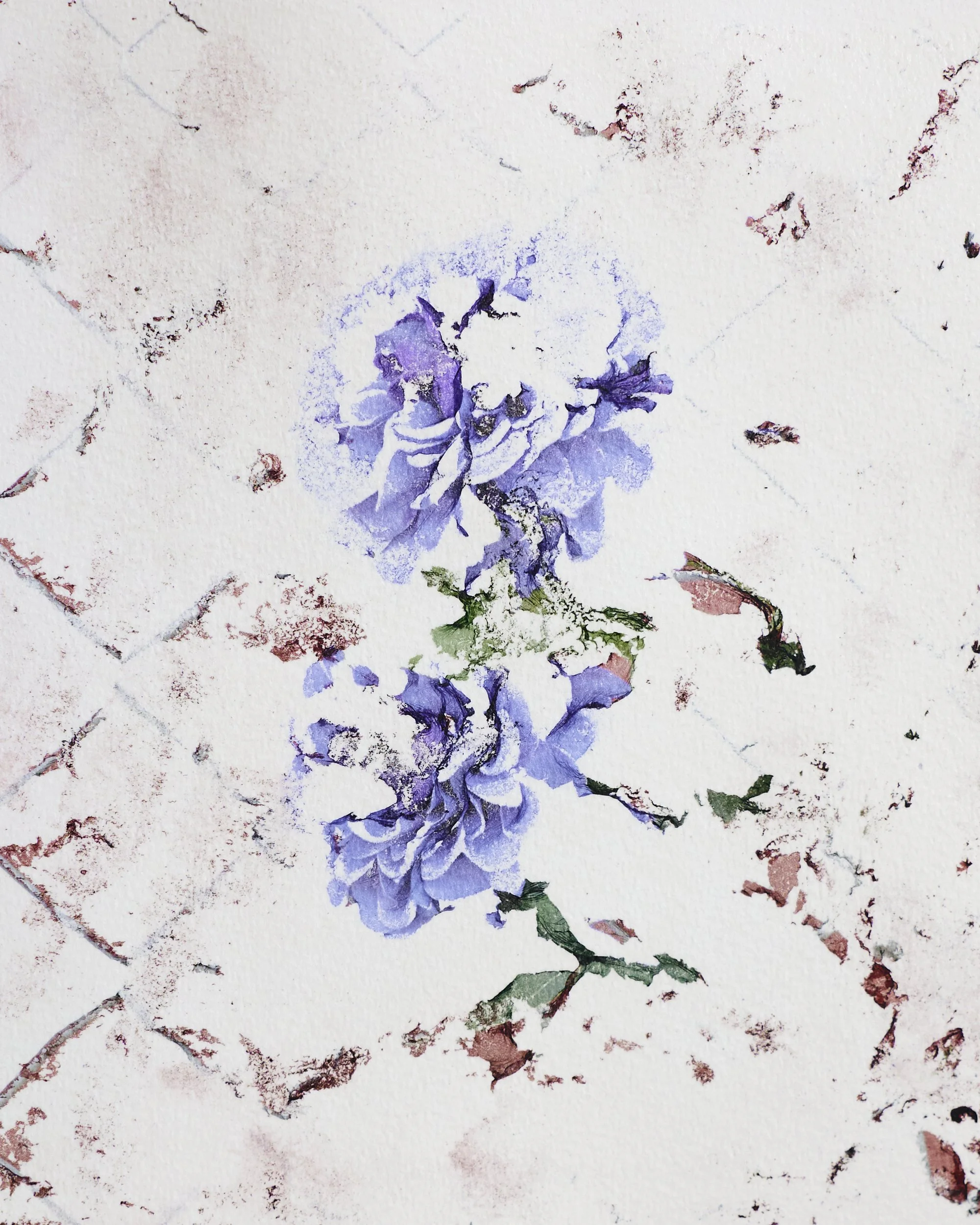
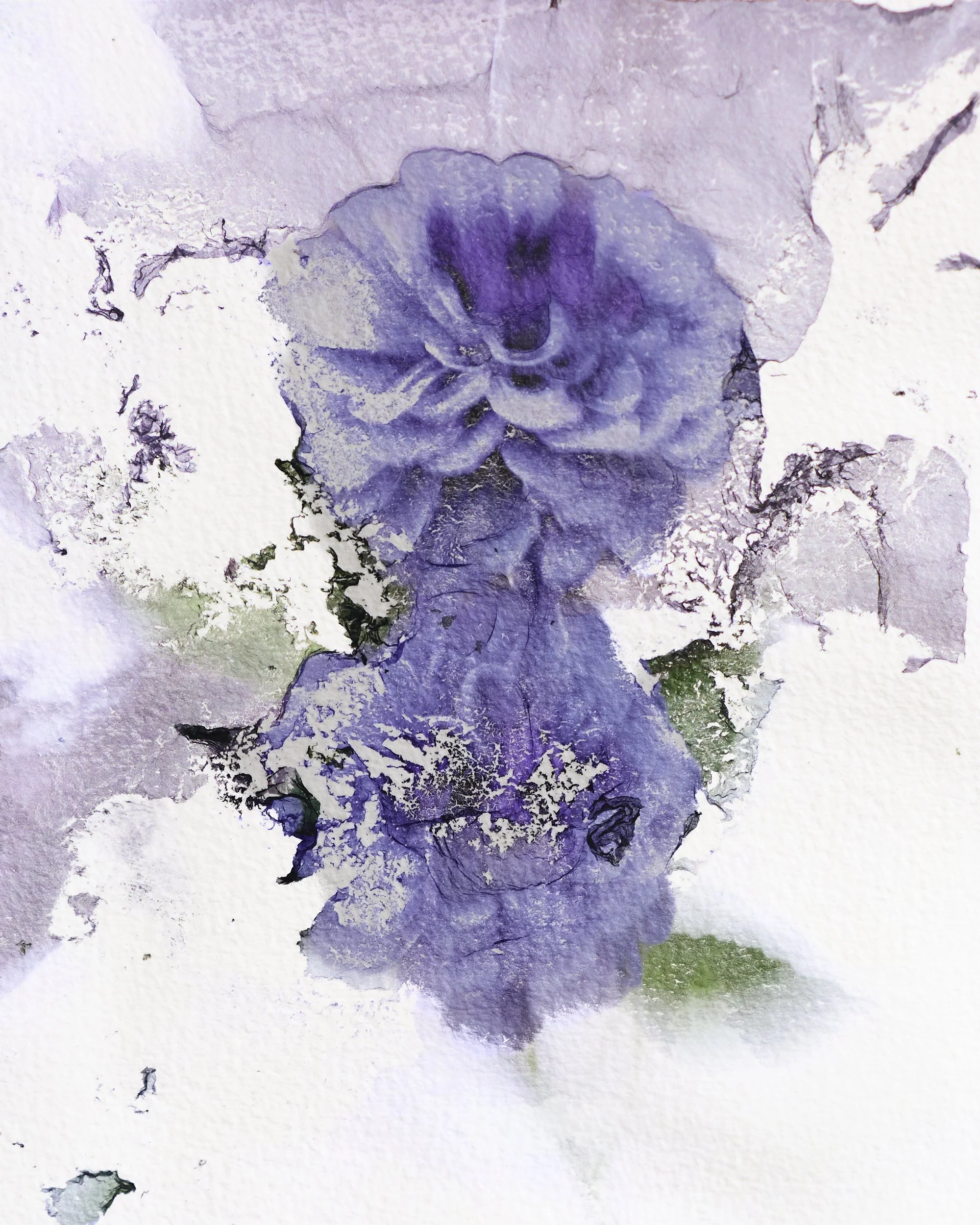
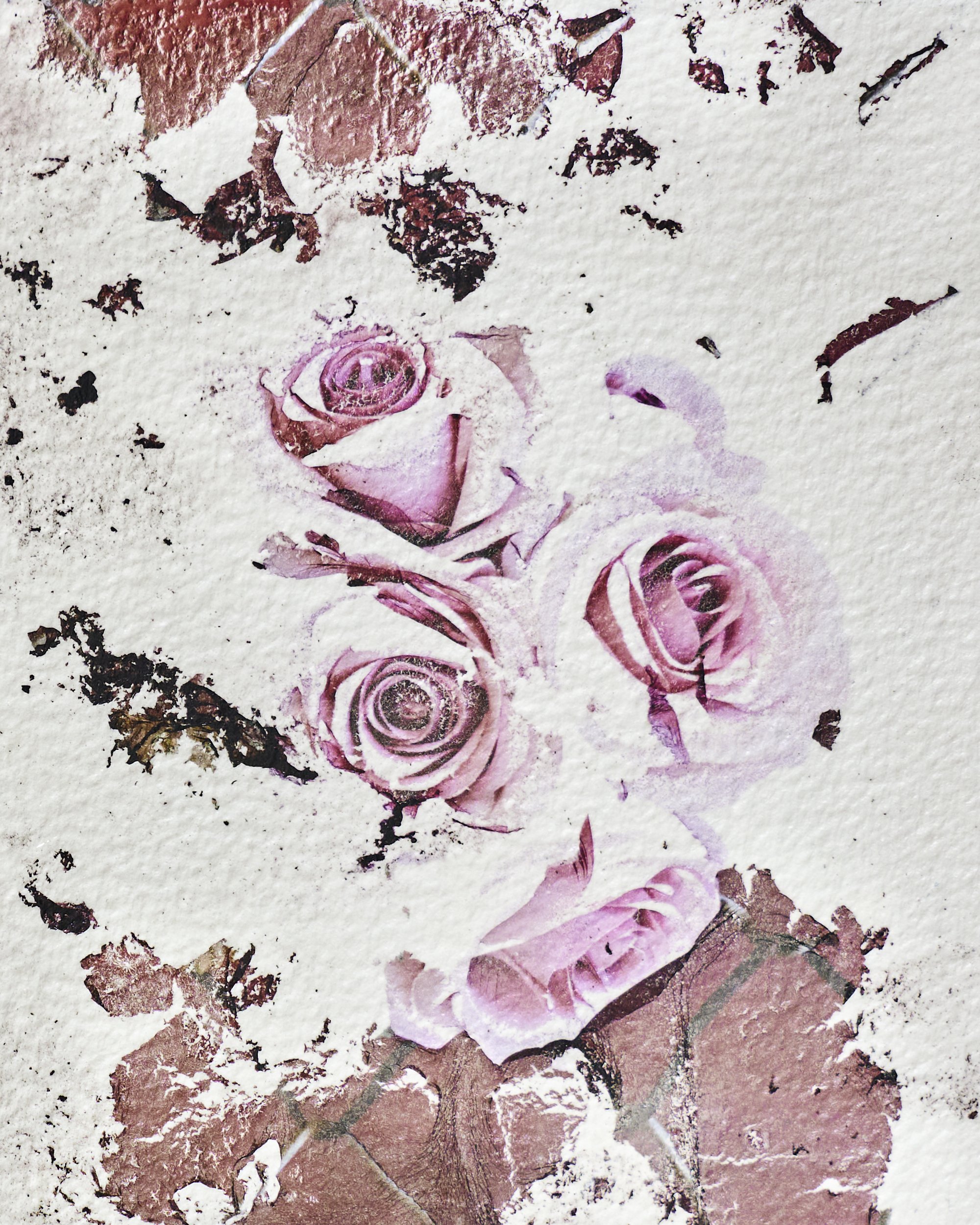
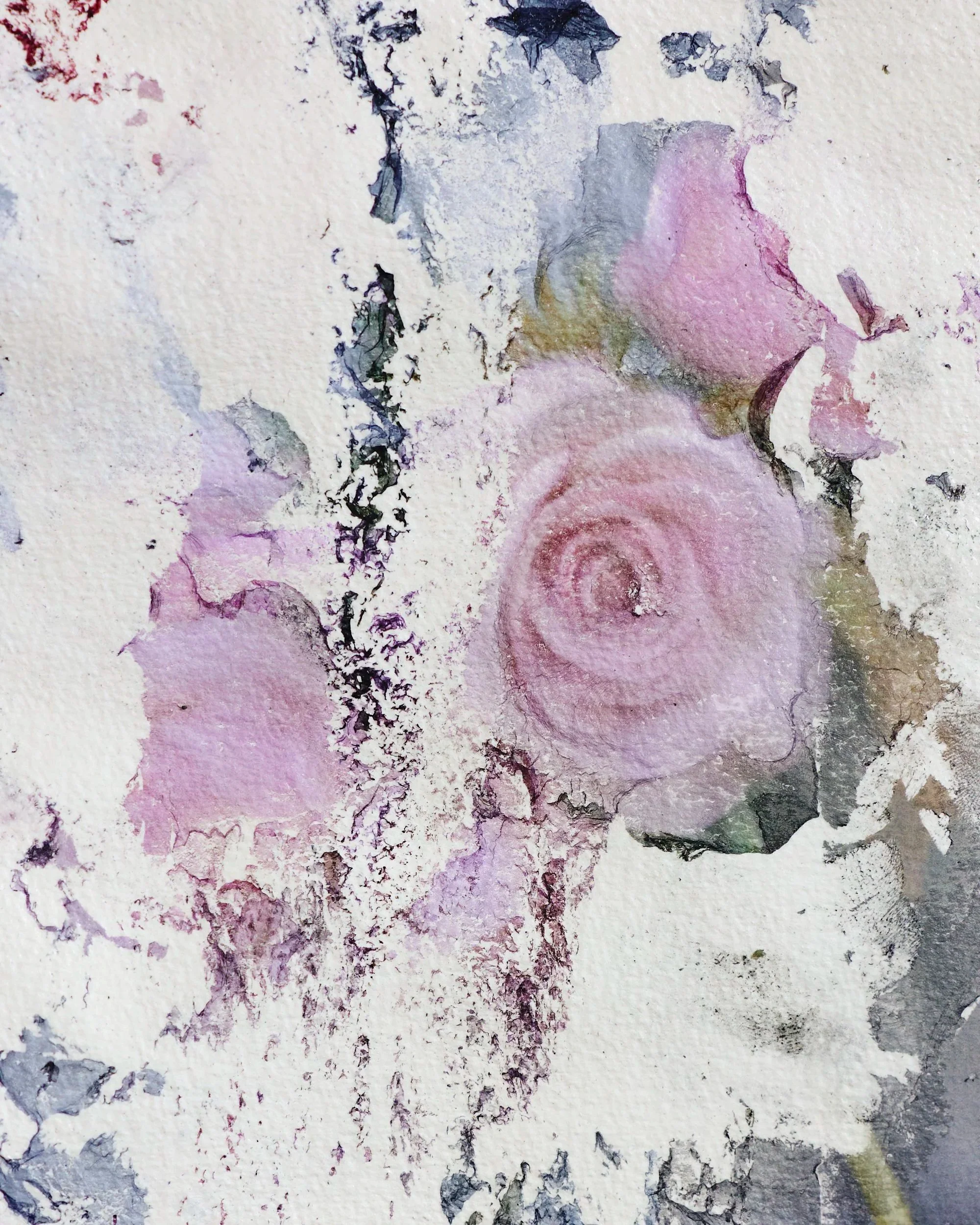
Artificial flowers, photographed, transferred and dissolved in water.
Plastic flowers are made to stand in for nature, yet they refuse its cycle of decay and outlast the blooms they imitate. Everlasting inverts that permanence.
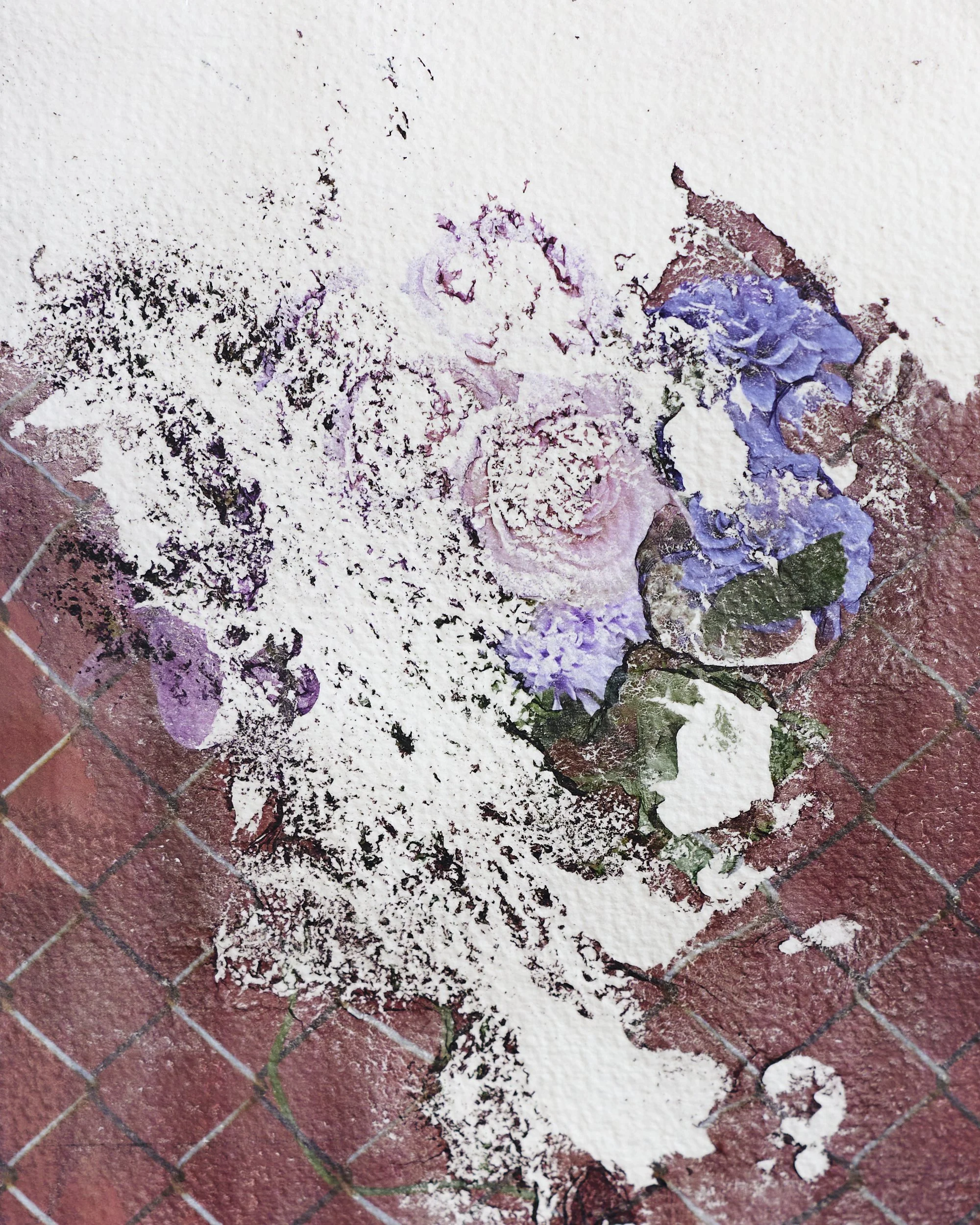
Artificial flowers woven through a rusting wire fence, a surface already yielding to time, were photographed and printed onto waterslide transfer paper. Each print was then immersed in water and left unsealed. As the ink lifted from its backing, I guided it by hand, moving loose fragments with a brush as they floated, until the image, rather than its subject, began to weather.
The surviving prints were rephotographed, returning each one-off surface to a digital image.
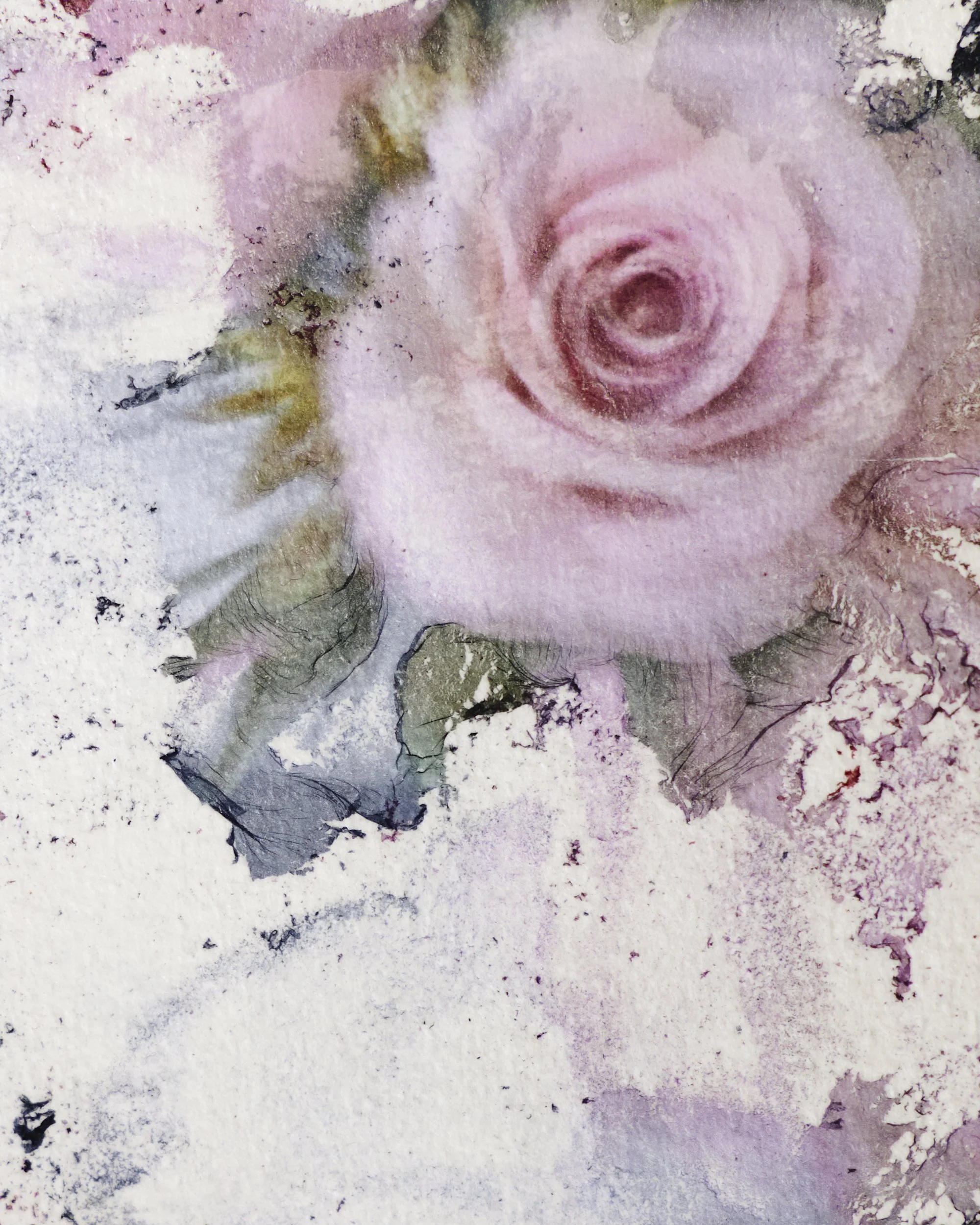
The method recalls the Polaroid emulsion lift, but where the lift preserves a fragile skin, the unsealed transfer gives way, coming apart in the water. Here, water performs the decay the flowers themselves will likely never know.
What remains sits in a palette of rose, lilac and violet, broken by brick-red and fragments of fence and foliage. Paper grain shows through where the ink has fallen away, and the flowers seem to dissolve into the surface. They read less as photographs than as watercolours, caught somewhere between ruin and accidental beauty.