
Photographing RMIT Building 8: A Study in Architectural Fragments
This journal entry offers a behind-the-scenes look at my photographic study of RMIT Building 8, tracing how the project developed from research and site visits through to final image selection. It reflects on my process of working with architectural fragments, exploring how photography can move beyond documentation to become a way of interpreting and understanding space.
Designed by Maggie Edmond and Peter Corrigan, RMIT Building 8 is a landmark of postmodern architecture in Melbourne.
In this project I explored how architectural meaning emerges through detail – from the building’s bold colours, layered forms and geometry.
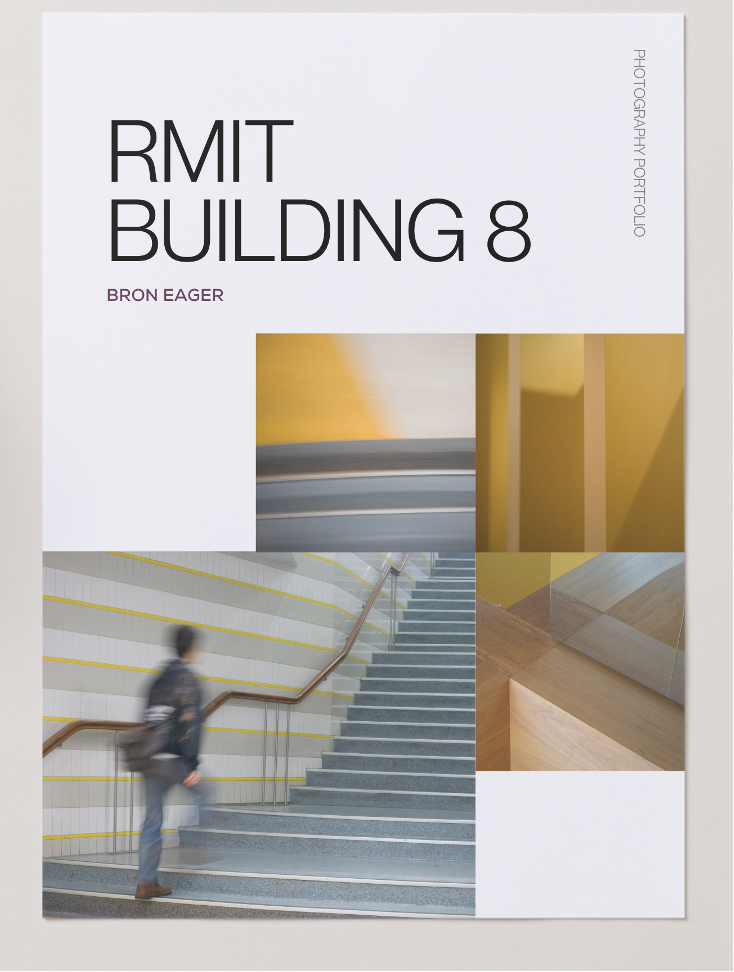
Rethinking Architectural Photography: From Whole to Fragment
Traditional architectural photography often prioritises clarity and completeness. Buildings are presented as resolved objects – fully visible and easy to interpret.
In contrast, this series approaches architectural photography as a process of reduction.
By isolating details – material junctions, colour relationships, spatial transitions – the work shifts focus from the building’s exterior identity to its internal language. Corridors, stairwells, and in-between spaces become central subjects rather than secondary elements.
This method reframes RMIT Building 8 not as a singular structure, but as a collection of interacting parts.
Drawing on ideas from Roland Barthes, these fragments function as ‘connotators’ – details that carry meaning beyond themselves. Each image becomes a visual synecdoche, where the part stands in for the whole.
The Creative Process: Photographing Interior Architecture in Melbourne
The project developed through an iterative, research-led photographic process.
An initial site visit focused on visual mapping – identifying recurring architectural motifs such as colour contrasts, material transitions, and spatial layering. This exploratory phase generated a broad visual archive of over a hundred images.
Multiple return visits refined this approach.
With clearer intent, compositions became more precise. Framing tightened, and attention shifted toward isolating elements that most strongly communicated the building’s architectural language.
From this larger body of work, six final images were selected, as specified in the client brief.
This process of editing and distillation was central – not just selecting the strongest photographs, but clarifying the conceptual direction of the series.
Between Representation and Abstraction in Architectural Photography
One of the key concerns in this work is the boundary between representation and abstraction.
While grounded in interior architecture, many of the images resist immediate recognition. Cropping, perspective, and movement disrupt spatial clarity, encouraging a slower, more attentive mode of viewing.
This approach is informed by photographers such as Aaron Siskind, whose work transforms urban surfaces into expressive compositions, and Austin Irving, known for her focus on overlooked architectural spaces.
There is also an influence from Olga Karlovac, particularly through the use of subtle camera movement. This introduces a sense of subjectivity, shifting the emphasis from static structure to embodied experience.
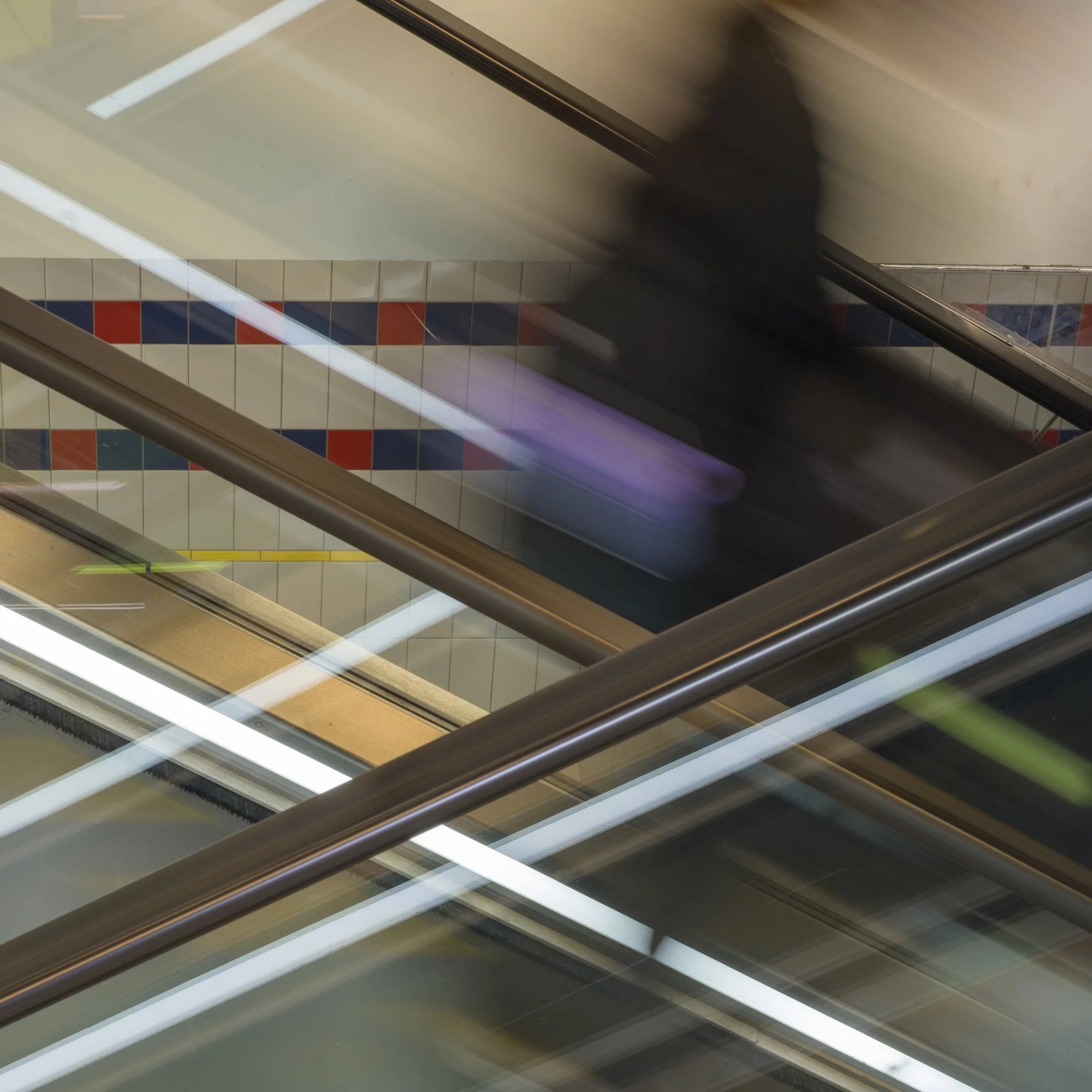
A New Perspective on RMIT Building 8
Most visual representations of RMIT Building 8 emphasise its exterior form – its bold geometry and iconic façade.
While effective, this perspective often overlooks the lived experience of the building’s interior.
This project contributes an alternative viewpoint.
By focusing on interior architectural details, it reveals the building as a dynamic environment shaped by movement, interaction, and material complexity. The images foreground how the building is encountered in everyday use – not just how it appears from the outside.
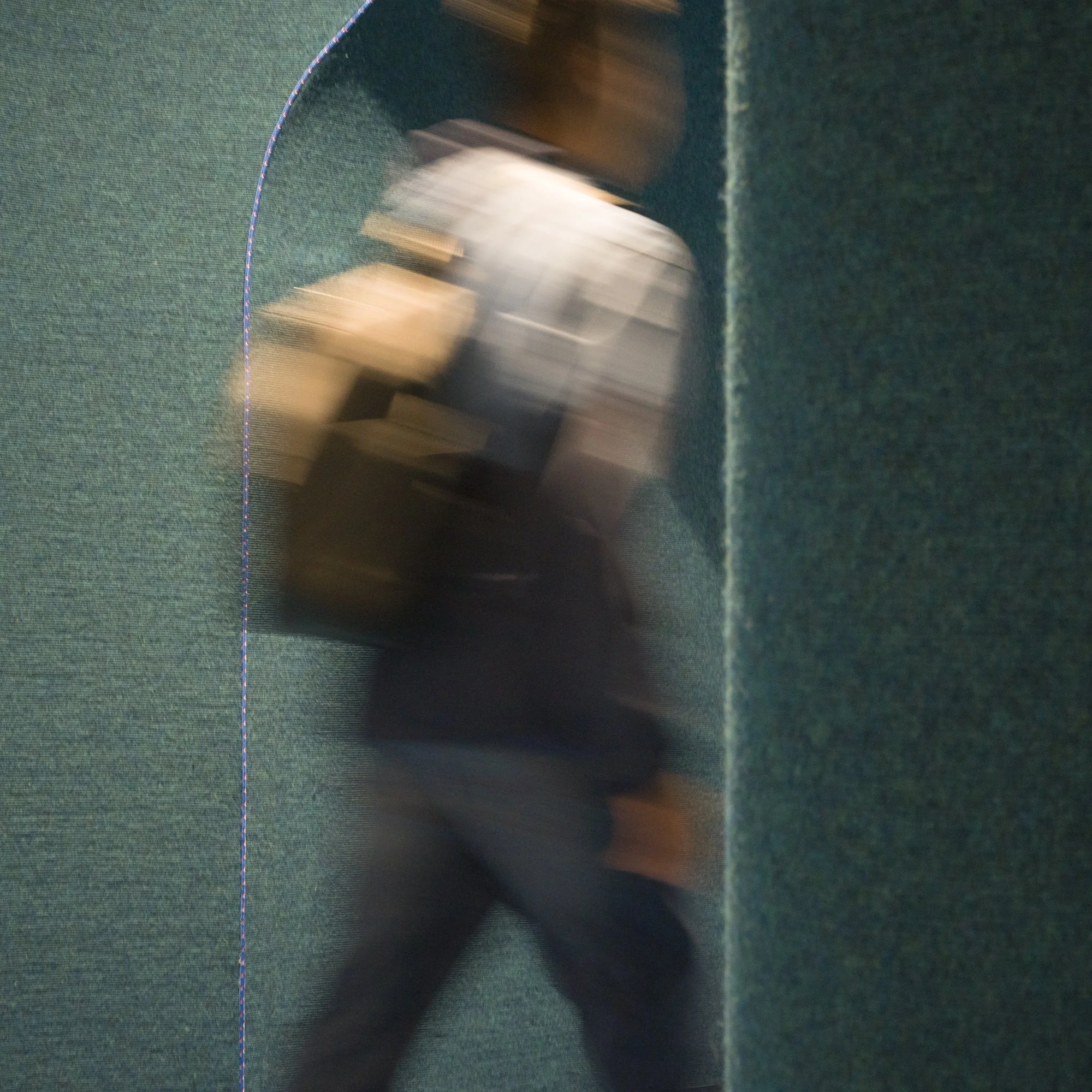
Photography as Research: Exploring Architecture Through Practice
This project sits within a broader enquiry into photography as both creative practice and research method.
Rather than simply documenting architecture, the process becomes a way of investigating it. Photographing is used to explore how meaning is constructed – how fragments, when isolated and recomposed, shape perception.
It raises ongoing questions:
How do we visually ‘read’ architecture?
What role do details play in shaping spatial understanding?
How can photography move beyond documentation into interpretation?
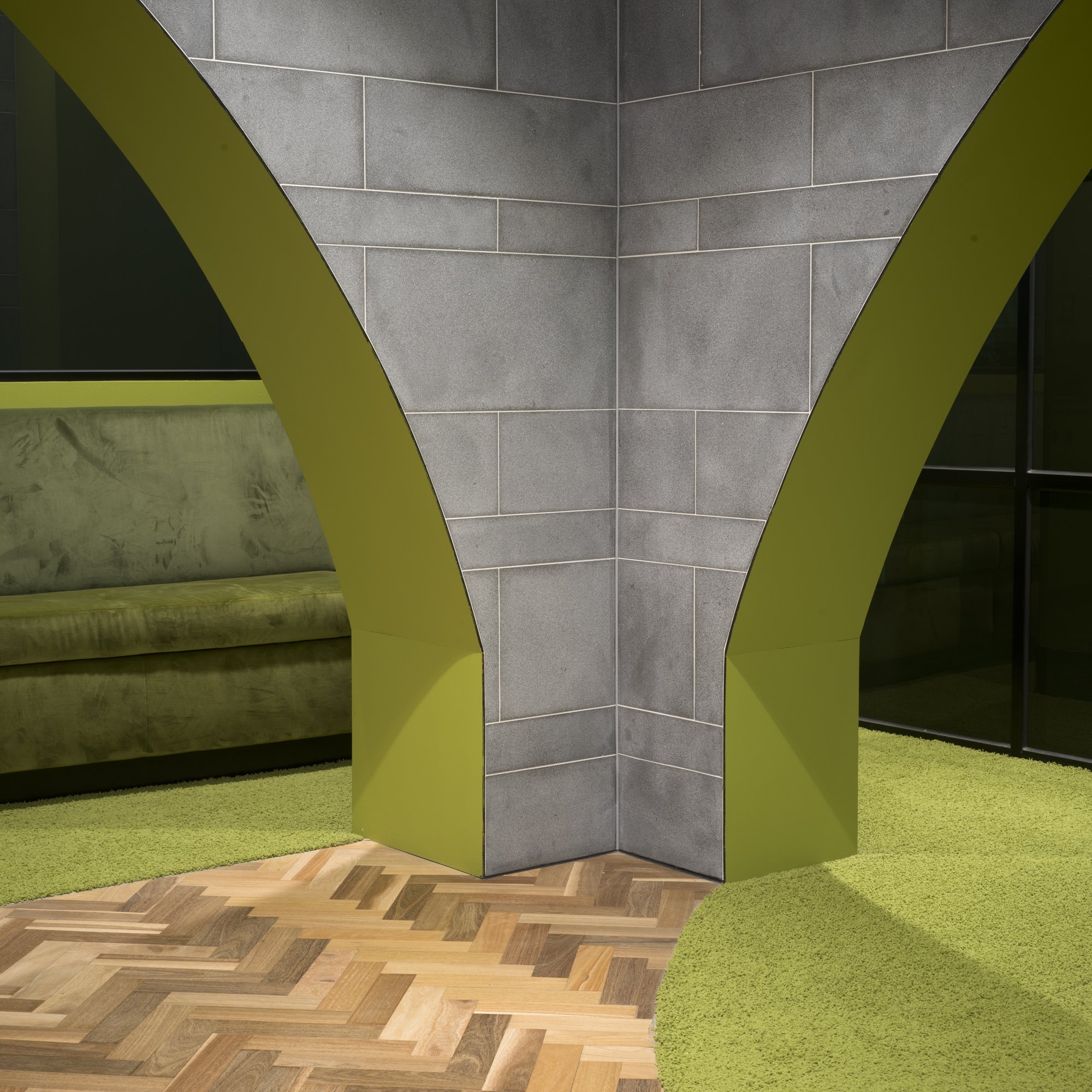
Seeing Architecture Differently
This project marked a shift in how I approach architectural photography.
Working with RMIT Building 8 pushed me to move beyond simply observing and documenting, and instead to work more deliberately with ideas – testing how concepts like fragmentation, abstraction, and visual language can be realised through images. It strengthened my confidence in treating photography as both a creative and research-led practice, where the process of making is inseparable from the process of thinking.
It also reinforced the value of returning – of revisiting a site, refining an approach, and allowing the work to evolve through iteration rather than immediacy. That shift, from capturing to constructing, is something I will carry forward into future projects.
I continue to develop this approach across new bodies of work, particularly in relation to urban environments and interior architectural spaces.
For commissioned projects or collaborations, you can learn more about my work or connect via Instagram or LinkedIn
